

Schools & Education Settings
Creative Health and Participatory Music in Schools
We deliver inclusive music experiences for schools and other education settings, supporting wellbeing, connection, and confidence through well-designed musical practice.
About This Work
Work delivered in schools and alternative education settings is offered as a privately commissioned service.
While much of our wider work is supported through grant funding, schools book the provision below directly, using their own budgets. This allows delivery to be flexible, responsive, and shaped around the specific needs of the setting.
Ways to work with us
We offer three main ways for schools and education settings to work with us. You’re welcome to read the page in full, or jump straight to the section most relevant to you.
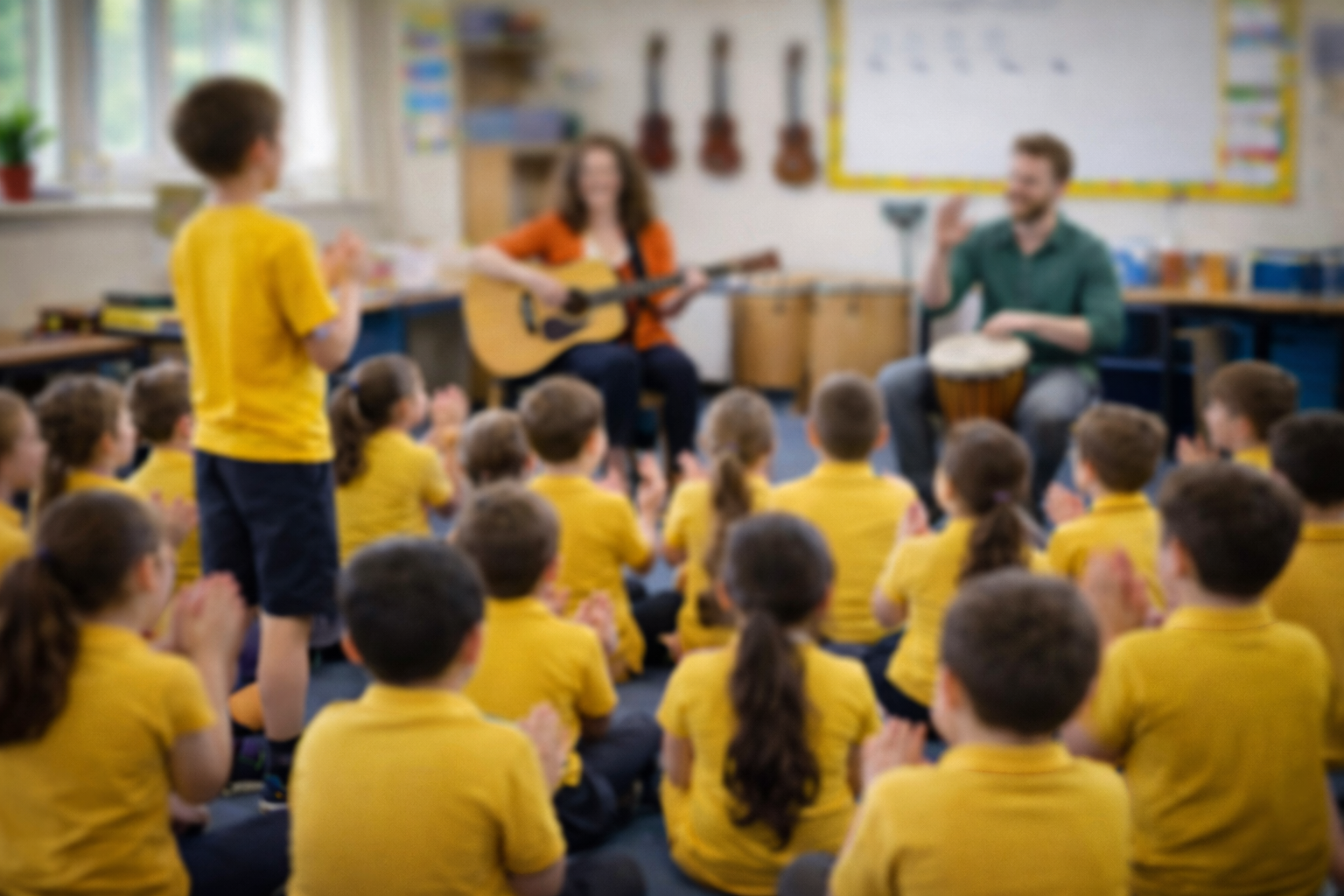
This workshop is designed as a shared creative experience in which pupils are given permission to explore, express, and shape music together. Improvisation is treated as a natural human capacity that emerges when structure provides safety and clarity.
Pupils make their own musical choices within a clear, supportive musical framework. A shared rhythm, steady tempo, and limited pitch set remove fear of “getting it wrong,” allowing pupils to focus on listening, responding, and expressing ideas through sound.
The session reflects creative health principles in practice, supporting social connection, shared calm, and a sense of belonging. Playing together, stopping together, and improvising simultaneously encourage attentional focus and mutual awareness.
Music-making is framed as a shared human activity rather than a performance task. It is completely acceptable — and expected — that for some pupils, the most meaningful way to take part may be by listening, observing, or staying at the edges of the room. These forms of participation are recognised and valued as part of the collective experience.
The workshop prioritises participation over outcome, choice over compliance, and process over perfection, helping pupils feel safe to explore, take creative risks, and build confidence in themselves and others.
The session concludes with reflection and affirmation, supporting pupils to recognise what they have achieved together and reinforcing the experience as meaningful and memorable.
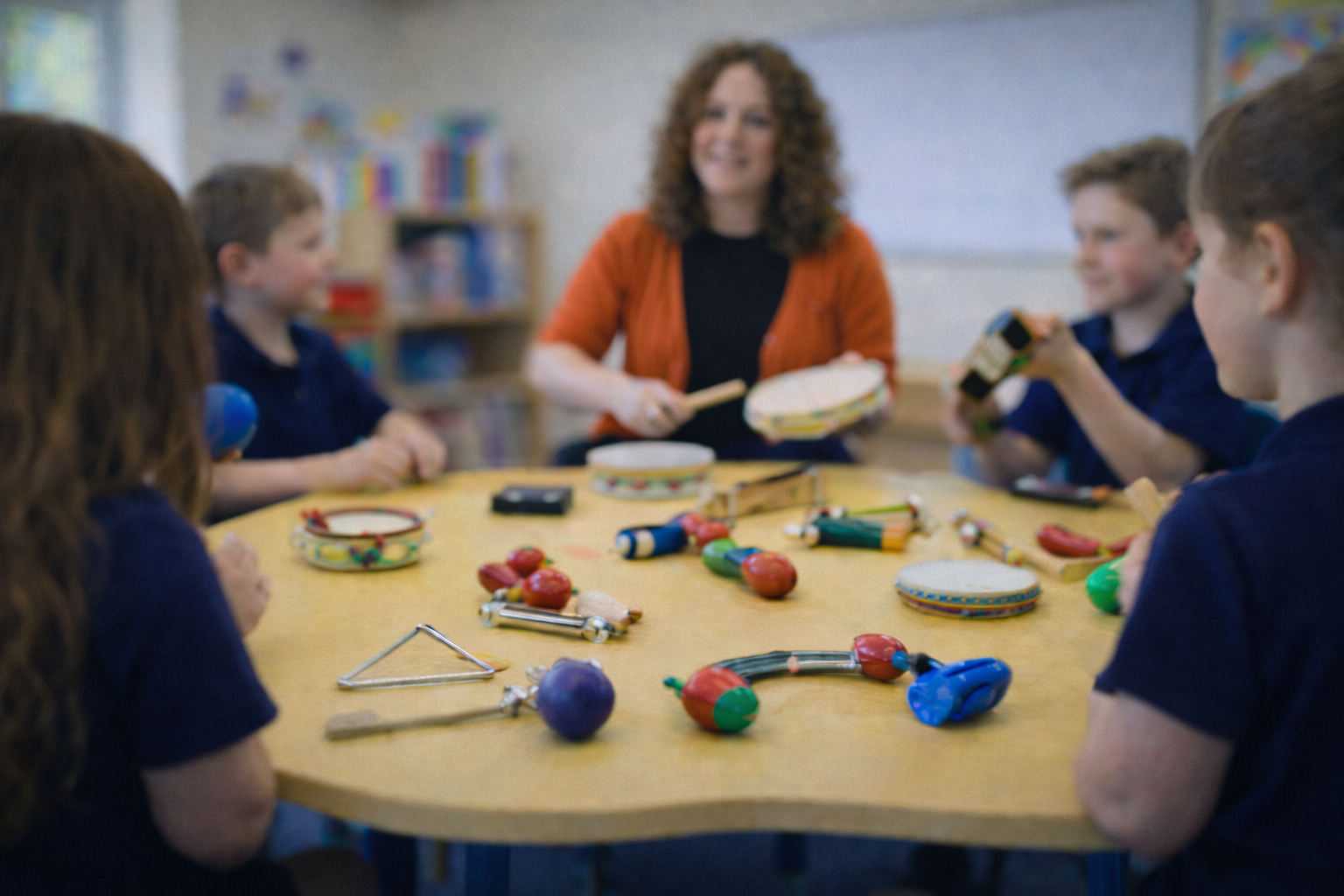
This option offers a longer-term, relationship-centred creative health project for nurture groups and pupils with SEND, including social, emotional, and mental health (SEMH) needs, or where a small-group setting is appropriate.
While grounded in the same musical principles as our whole-class work, small-group delivery allows sessions to be much more child-led and responsive. Musical structure flexes around pupils’ interests, communication styles, and capacity for engagement, rather than the other way round.
The extended format creates space to notice and value subtle, non-linear progress. Small achievements are recognised and affirmed, supporting pupils to build confidence, self-belief, and trust in their own capabilities over time.
Participation is always voluntary and adaptive. Listening, observing, or engaging briefly are all recognised as valid forms of participation, particularly in early sessions. As trust develops, many pupils naturally increase their level of involvement.
The project supports emotional regulation, social connection, and a sense of belonging through shared music-making. Sessions balance predictable structure with flexibility, helping pupils feel safe while remaining free to explore.
This work is not positioned as therapy or clinical intervention. It complements existing school support by offering a calm, inclusive space for meaningful creative engagement, delivered with care, consistency, and sensitivity.
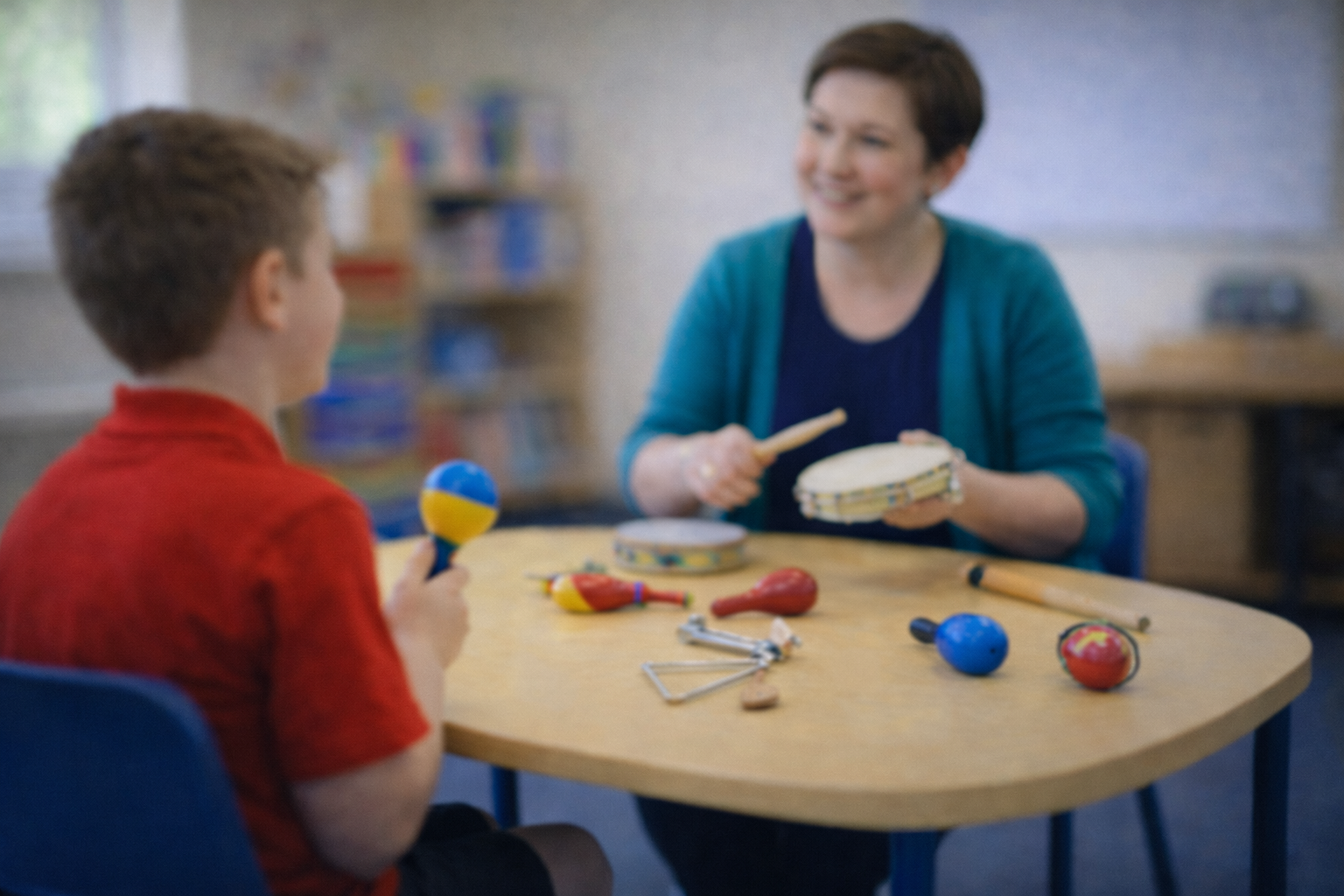
We offer longer-term 1:1 Creative Health provision, delivered through inclusive music making, for pupils who benefit from sustained, individual support and a highly consistent approach.
This work is relational and carefully paced, providing a stable structure while remaining responsive to each pupil’s communication style, interests, and capacity for engagement. Sessions prioritise agency, choice, and trust, allowing pupils to develop confidence in their own musical ideas over time.
A minimum commitment of two full terms is required to support continuity, relationship-building, and meaningful progress. This ensures the work is not framed as a short-term intervention or quick fix, but as a steady, supportive creative process.
Participation is always flexible and adaptive. Listening, exploring, or engaging in brief moments are all recognised as valid ways of taking part, particularly in the early stages. Progress is understood as individual and non-linear, and is valued accordingly.
This provision can be delivered either on school site or off site, depending on the needs of the pupil. For children who are not currently accessing school, the same 1:1 provision may be offered off site during the school day, using the same approach, structure, and staffing. The only difference is location.
This work is not positioned as therapy or clinical intervention. It complements existing school support by offering a calm, one-to-one creative space that supports confidence, self-belief, and positive engagement with learning and expression.
What Schools Say
“As a school we have seen improvement in the children’s attention span, ability to listen to and follow instructions, ability to collaborate and in their social communication. The inclusive environment that Laura creates is very low demand and allows children to feel safe and comfortable in her care.”
“My 1:1 is smiling non-stop in Laura’s sessions. We definitely do not provide enough music sessions in school and they are often a ‘sit down and look at the screen’ lessons, not hands on and sensual like Laura’s are. The eyes of my 1:1 sparkle non-stop and he finds it difficult to stay still as he is soooo excited to use different instruments. ”